We find the record
Archives, newspapers, land records, corporate minutes, the family boxes. We catalog and digitize what exists — and you keep that archive afterwards, indexed, whatever else happens.
Most of your history was never photographed. We research it, record the people who still remember it, and reconstruct the years no camera recorded — so an institution with a century behind it finally has something to show for it.
Almost nothing before 1960 was filmed. What survives is written down, or carried in somebody's memory — and neither one plays on a screen. Then the milestone arrives and there is nothing to show.
Your history is not missing. It was just never filmed.
Archives, newspapers, land records, corporate minutes, the family boxes. We catalog and digitize what exists — and you keep that archive afterwards, indexed, whatever else happens.
Whoever holds your history — a founder's child, a retired executive, the one person who has studied it — will not be here to tell it forever. We record them properly and at length, and preserve the full interviews.
Where the visual record is silent, we reconstruct it — every frame sourced to documented research, and disclosed in the film itself. Never presented as real footage.
Both films began as oral histories with kūpuna and became something neither photography nor archive could have produced alone.
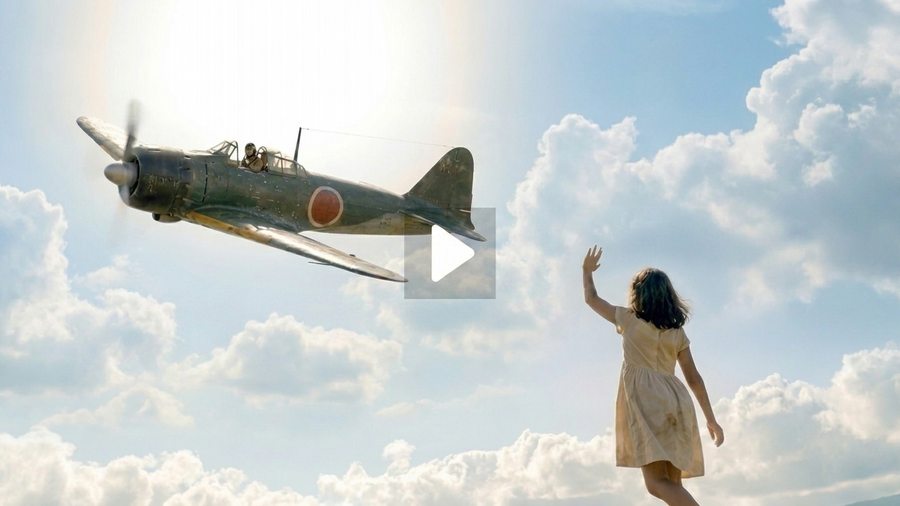 Excerpt
Born in Kaimukī in 1932. A trolley to Chinatown, her grandfather's lap, and a Sunday morning in December 1941 when a pilot waved from the sky.
See the film →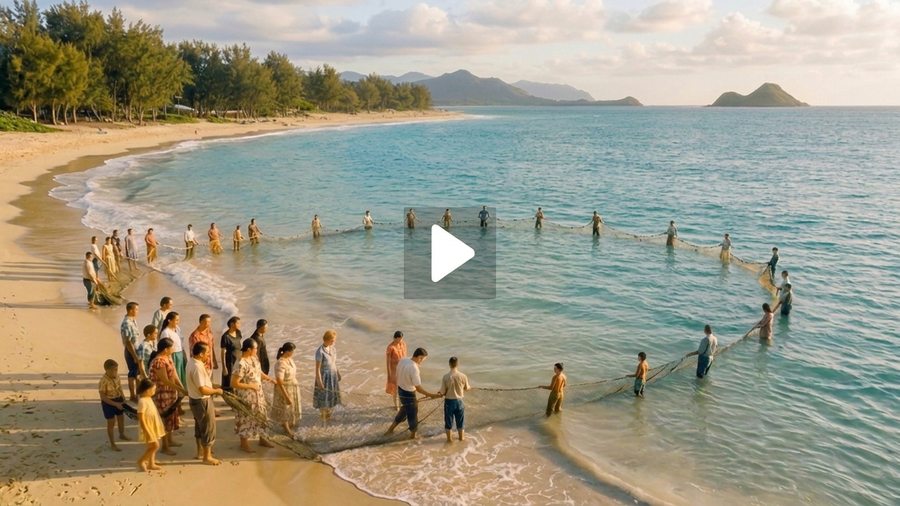 Excerpt
A hukilau childhood, a summer on Popoiʻa, and the day three trucks ran the gate at Kāneʻohe Marine Corps Base to take a stand at Mōkapu.
See the film →These exist because the only thing worth more than the film is the credibility of the institution it is made for.
Every reconstructed frame traces to a photograph, document, interview or period reference. You receive the source list with the film.
Each film states plainly what was reconstructed and what was not — up front, and again at the end. Never buried in the credits.
Before release, every film is reviewed by the people with the deepest claim on the story — the subject if living, the family where we can find them, and always the institution whose history it is.
No free spec work, and no six-figure decision made on a promise.
We assess your archive, record two or three interviews, write a story treatment, and build a 30-second proof clip from your own material — so the quality question is settled before anyone commits further.
A single film on the founding — six to eight reconstructed scenes, three short cutdowns, and the archive material we digitized to make it.
The full anniversary program: hero film, twelve short cutdowns, lobby loop, recruiting cut, cataloged archive and premiere support.
Rise Media Group is a historical reconstruction studio in Honolulu. We work with companies, schools, hospitals and foundations whose history is older than the photographic record of it — and we take what was only ever remembered or written down, and make it something people can watch.
Our researchers and story leads are trained through the RiseHI Creative AI Accelerator, a Hawaiʻi workforce program, and hired here at market rates. The films about this place are made by people from it.
Legacy budgets are set twelve to eighteen months ahead. If yours is inside three years, now is the conversation.
Start a Discovery